


 |
Uma Placa de Resfriamento Líquido Soldada É uma Dissipação de Calor Refrigerada a Líquido
Detalhes do produto:
| Lugar de origem: | Dongguan,Guangdong,China |
| Marca: | Uchi |
| Certificação: | SMC |
| Número do modelo: | Dissipador de calor |
Condições de Pagamento e Envio:
| Quantidade de ordem mínima: | 100 unidades |
|---|---|
| Preço: | 1300-1500 dollars |
| Tempo de entrega: | Não limitado |
| Termos de pagamento: | T/T, paypal, Western Union, |
| Habilidade da fonte: | 50000000 unidades por mês |
|
Informação detalhada |
|||
| Tecnologia de ligação: | FSW, tubo de pressão | Pressão máxima de operação: | 10 barras |
|---|---|---|---|
| Processos adicionais: | Usinagem CNC | Planicidade da superfície: | 0,1 mm |
| Potência da fonte de calor: | 24 kW | Resistência à corrosão: | Sim, com revestimento adequado |
| Tamanho de pacote único: | 45X40X10cm | Dimensões: | Personalizável |
| Tecnologia: | Dobragem de tubos | Tamanho da caixa de embalagem: | 42,5*33*18CM |
| Classificação IP: | IP65 | Tratamento de superfície: | Estampagem + acabamento superficial |
| Número de hidrovias: | 6 hidrovias | ||
| Destacar: | placa de resfriamento líquido soldada,placa de dissipação de calor refrigerada a líquido,placa de resfriamento de dissipação de calor |
||
Descrição de produto
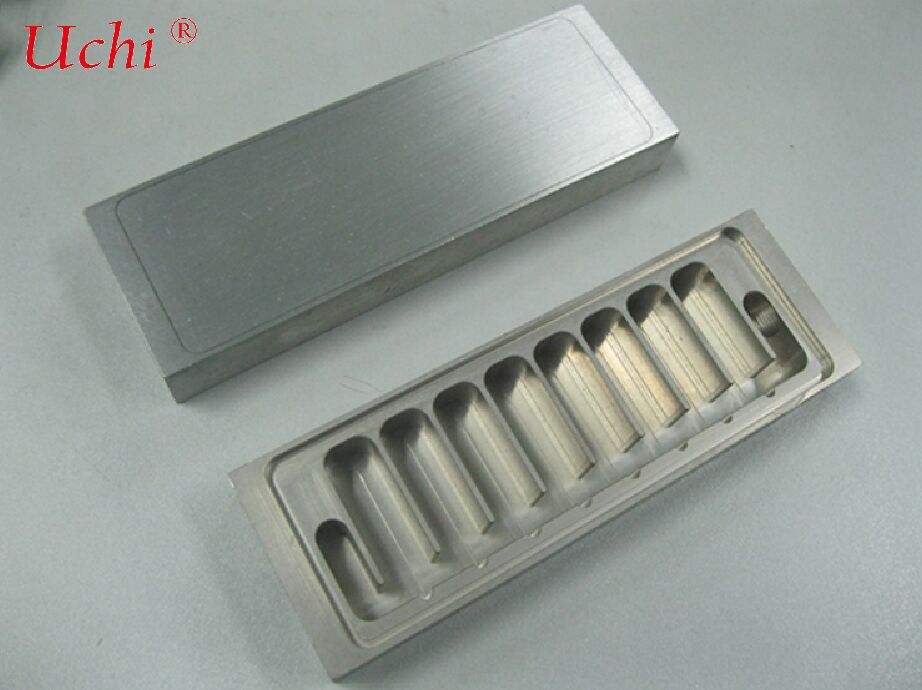
Placa de refrigeração líquida brasada
A brazed liquid cooling plate is a liquid-cooled heat dissipation plate formed by welding the upper and lower cover plates and the internal flow channels / fins in a high-temperature vacuum furnace using the brazing processPossui um excelente desempenho de vedação, canais de fluxo precisos, baixa resistência térmica e resistência a alta pressão, tornando-o um dos processos principais para placas de resfriamento de líquido de ponta.
I. Estrutura básica
Consiste geralmente em três camadas:
- Placa de cobertura superior: fornece vedação, interfaces e superfície de montagem
- Camada média: placa do canal de fluxo / barbatanas de turbulência / barbatanas de alfinete
- Placa de cobertura inferior: superfície de ligação para componentes geradores de calor
As três camadas são ligadas metalúrgicamente em uma unidade integral através de solda.
II. Processo de base: brasagem a vácuo
- Formação de chapas de metal → revestimento / pré-colocação de metal de preenchimento de solda
- Empilhamento e posicionamento → carregamento no forno de brasagem a vácuo
- Aquecimento a alta temperatura (aproximadamente 600°C para o alumínio)
- Metal de enchimento de brasagem que derrete, molhe e preenche lacunas
- Refrigerar e formar para criar soldas fechadas de alta resistência
Vantagens:
- Sem porosidade, sem articulações frias, extremamente estanque
- Alta resistência à solda e boa resistência à corrosão
- Permite projetos complexos e precisos de canais de fluxo
- Superfície lisa, ideal para colar dispositivos de alta potência
III. Características essenciais
-
Alta eficiência de dissipação de calorOs micro-canais, as barbatanas com pintas e as barbatanas porosas podem ser integradas na camada média, proporcionando uma grande área de troca de calor e baixa resistência térmica.
-
Forte resistência à pressãoPressão nominal padrão: 3·10 bar; versões de alta pressão superiores a 15 bar, adequadas para carregamento rápido, armazenamento de energia e motores elétricos.
-
Selo fiávelEstrutura totalmente soldada com quase zero risco de fugas, em conformidade com os testes de fugas de hélio.
-
Excelente planície da superfícieAdequado para dissipação de calor de IGBTs, módulos SiC, dispositivos de alimentação, baterias e outros componentes planos montados em superfície.
-
Fabricados principalmente de liga de alumínioComumente usa ligas 3003, 5052, 6061 e outras, oferecendo design leve, alta condutividade térmica e custo moderado.
IV. Projetos comuns dos canais de fluxo
- Canal de fluxo serpentino: estrutura simples, baixa queda de pressão
- Multicanais paralelas: transferência de calor uniforme
- Pernas de microcanais: para cenários de alta densidade de fluxo de calor
- Matriz de barbatanas de pin: transferência de calor ultra-alta, adequada para GPUs / lasers
V. Aplicações típicas
- Veículos de energia nova: controladores de motores, conversores OBC, DC-DC, módulos SiC de 800 V
- Armazenamento de energia e carregamento rápido: conversores de armazenamento de energia PCS, estações de carregamento ultra-rápido, dissipação de calor para shunts de carregamento flash
- Controle e alimentação industrial: SVG, inversores fotovoltaicos, inversores de alta tensão
- Optoeletrónica e potência de computação: lasers, servidores GPU, sistemas de radar
VI. Comparação com outras placas de arrefecimento líquido
-
versus placas de arrefecimento líquido soldadas por fricção:A solda por atrito é mais adequada para canais de fluxo precisos e alta densidade de fluxo de calor; a soldagem por atrito tem melhor desempenho para aplicações de grande tamanho e alto fluxo.
-
versus placas de arrefecimento líquido de perfil extrudido:As placas soldadas oferecem um design de canal de fluxo mais flexível e uma dissipação de calor mais forte, a um custo maior.
-
versus placas de arrefecimento de líquido em tubos:Melhor desempenho de ligação e menor resistência térmica, ideal para dispositivos de alta potência.
Deseja saber mais detalhes sobre este produto
